


- Alexei Kovalev
- Andrew Shaw
- Antti Niemi
- Artturi Lehkonen
- Bob Gainey
- Brendan Gallagher
- Carey Price
- Charles Hudon
- Charlie Lindgren
- David Schlemko
- Dickie Moore
- Dominic Moore
- Doug Harvey
- Guy Lafleur
- Guy Lapointe
- Henri Richard
- Howie Morenz
- Jacob de la Rose
- Jacques Plante
- Jean Beliveau
- Jeff Petry
- Jeremiah Addison
- Jesperi Kotkaniemi
- Joel Armia
- Jonathan Drouin
- Jordie Benn
- Karl Alzner
- Ken Dryden
- Larry Robinson
- Mats Naslund
- Maurice Richard
- Max Domi
- Mike Reilly
- Noah Juulsen
- Patrick Roy
- Paul Byron
- Phillip Danault
- Pierre Turgeon
- Saku Koivu
- Serge Savard
- Shea Weber
- Stanley Cup
- Tomas Plekanec
- Tomas Tatar
- Victor Mete
- Xavier Ouellet
NHL Moves Fully to Fanatics: What It Means for Adidas Canadiens Gear
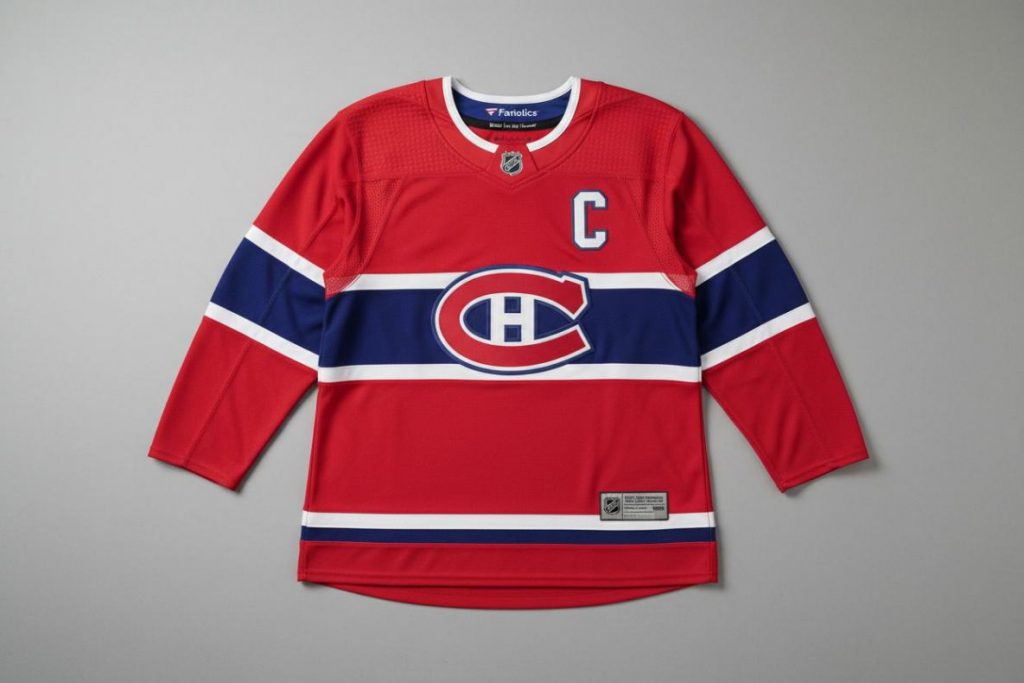
The NHL’s decision to transition fully to Fanatics as its on-ice and retail apparel partner marks one of the most significant equipment and merchandising shifts in modern hockey. For fans of the Montreal Canadiens, a franchise defined by tradition, symbolism, and some of the most recognizable jerseys in sports history, this change raises important questions. Adidas has been closely associated with Canadiens gear in recent years, and its departure from the NHL ecosystem inevitably affects how fans perceive authenticity, quality, and continuity. Understanding what this transition really means requires looking beyond headlines and into manufacturing standards, branding philosophy, retail availability, and long-term fan impact.
NHL–Fanatics Partnership Explained
Fanatics’ rise within the sports merchandising world has been rapid and aggressive. Already dominant in licensed fan apparel across major North American leagues, the company’s move into full NHL control represents a strategic expansion from retail distribution into core equipment and jersey production. For the league, the appeal is obvious: centralized logistics, data-driven merchandising, and global e-commerce reach.
From the NHL’s perspective, the shift promises consistency across markets and stronger direct-to-consumer sales. Fanatics operates with an integrated supply chain model that allows faster production cycles and more responsive inventory management. This is particularly relevant for teams like the Canadiens, whose global fanbase extends far beyond Canada and the United States. The league expects this partnership to modernize how fans access official gear, especially online, while maintaining league-wide branding standards.
Adidas and the Montreal Canadiens Legacy
Adidas’ relationship with the NHL, and with the Canadiens specifically, has been defined by a focus on performance materials and heritage-driven design. Montreal’s jerseys are not just uniforms; they are cultural artifacts. The iconic red, white, and blue color scheme, the precise striping, and the distinctive “CH” crest demand an exacting approach to manufacturing.
Under Adidas, Canadiens jerseys benefited from premium fabrics, consistent sizing, and a clear distinction between authentic on-ice models and replica fan versions. Many supporters associate this era with reliability and respect for tradition. As Adidas exits the NHL space, existing Canadiens Adidas jerseys effectively become legacy items, representing a specific period in the club’s long history.
What Changes Under Fanatics Production
The most immediate concern among Canadiens fans revolves around quality control and material standards. Fanatics has historically focused on mass-market fan apparel rather than elite athletic performance gear. However, with the NHL partnership, the company has committed to elevating its production standards to meet professional requirements.
This transition introduces several structural changes that fans should understand. Manufacturing processes will be consolidated, and jersey lines may be simplified to align retail and on-ice designs more closely. Branding placement, stitching techniques, and fabric blends are expected to evolve, though the NHL maintains final approval over all designs to protect team identity.
In practical terms, fans can expect differences in fit, texture, and detailing compared to Adidas-era Canadiens jerseys. These differences are not necessarily negative, but they do represent a departure from what long-time supporters are accustomed to.
Key Differences Fans Will Notice First
As Fanatics begins rolling out Canadiens gear, several visible and experiential changes are likely to stand out. These shifts will influence both casual buyers and dedicated collectors.
Before diving deeper, it helps to outline the most commonly discussed changes in one place, as they frame much of the current fan debate.
- Altered fabric feel, with an emphasis on lighter and more flexible materials.
- Adjustments in jersey fit, particularly in retail replicas.
- Streamlined stitching and crest application techniques.
- Potentially broader price segmentation across product tiers.
These differences sit at the center of fan conversations, especially among those who already own Adidas Canadiens jerseys. What matters most is how these changes perform over time, both in durability and visual consistency.
Adidas Canadiens Jerseys as Collector Items
With Adidas no longer producing NHL jerseys, existing Canadiens gear from this era takes on new significance. For collectors, these jerseys represent a closed chapter in the franchise’s visual timeline. Scarcity plays a major role here: once retail stock dries up, prices on the secondary market often rise, particularly for authentic models and limited player editions.
From a historical standpoint, Adidas Canadiens jerseys capture a period defined by league-wide modernization and advanced textile technology. Fans who value authenticity may increasingly view these jerseys as benchmarks against which future Fanatics products are judged. This dynamic is common in sports merchandising transitions, where outgoing manufacturers gain nostalgic and financial value over time.
Comparing Adidas and Fanatics Canadiens Jerseys
To better understand what is changing, a direct comparison helps clarify the practical differences between the two manufacturers as they relate specifically to the Montreal Canadiens.
Before the table below, it’s important to note that this comparison focuses on general trends rather than isolated defects or early-production anomalies.
| Feature | Adidas Era Canadiens Gear | Fanatics Era Canadiens Gear |
|---|---|---|
| Fabric Technology | Performance-focused, heavier knit | Lighter, retail-oriented blends |
| Fit Profile | Athletic, structured | More relaxed, consumer-friendly |
| Crest Application | Multi-layer stitching | Heat-pressed or hybrid methods |
| Retail Availability | Limited seasonal drops | Continuous, high-volume supply |
| Collector Appeal | High, due to discontinued status | Developing, dependent on quality |
After reviewing this comparison, it becomes clear that the shift is less about immediate decline or improvement and more about a philosophical change in production. Fanatics prioritizes accessibility and scale, while Adidas emphasized performance heritage.
Impact on Canadiens Branding and Tradition
One of the NHL’s stated goals in partnering with Fanatics is preserving team identity while modernizing delivery. For the Canadiens, this balance is particularly sensitive. Few franchises carry as much symbolic weight in their visual presentation. Even minor changes to shade, stripe width, or crest texture can provoke strong reactions.
The league has reassured fans that all core elements of Canadiens branding remain protected. Fanatics operates under strict NHL guidelines, meaning radical redesigns are unlikely. Still, subtle variations are inevitable when manufacturing processes change. Over time, these nuances may become normalized, especially for younger fans whose first Canadiens jersey may be Fanatics-made rather than Adidas-produced.
Retail, Pricing, and Fan Accessibility
Another major consequence of the Fanatics takeover is pricing structure. Historically, Adidas jerseys occupied a premium segment, particularly authentic models. Fanatics’ business model emphasizes tiered pricing, offering multiple entry points for fans with different budgets.
This could benefit Canadiens supporters who previously found official jerseys prohibitively expensive. At the same time, long-time fans may perceive a dilution of exclusivity. The challenge for Fanatics will be maintaining perceived value while expanding access, especially in a market as passionate and knowledgeable as Montreal.
Conclusion
The NHL’s full transition to Fanatics represents a turning point not only for league merchandising but also for how Canadiens fans engage with team identity through apparel. Adidas Canadiens jerseys now stand as legacy items, valued for their craftsmanship and place in history. Fanatics, meanwhile, brings scale, accessibility, and a different production philosophy that will shape the next generation of Canadiens gear.
Rather than viewing the change as purely positive or negative, it is more accurate to see it as evolutionary. The Canadiens brand remains intact, but the materials, processes, and consumer experience surrounding it are entering a new era. For fans, understanding these dynamics allows more informed choices, whether collecting Adidas-era jerseys or embracing what Fanatics delivers next.